Analysis Energy
South Sudan oil: 14 open blocks in focus before Juba summit
South Sudan is pitching 14 open oil blocks ahead of its energy conference in Juba on 24 and 25 November. Output is about 174,000 barrels a day, and the government wants 230,000 in the near term.
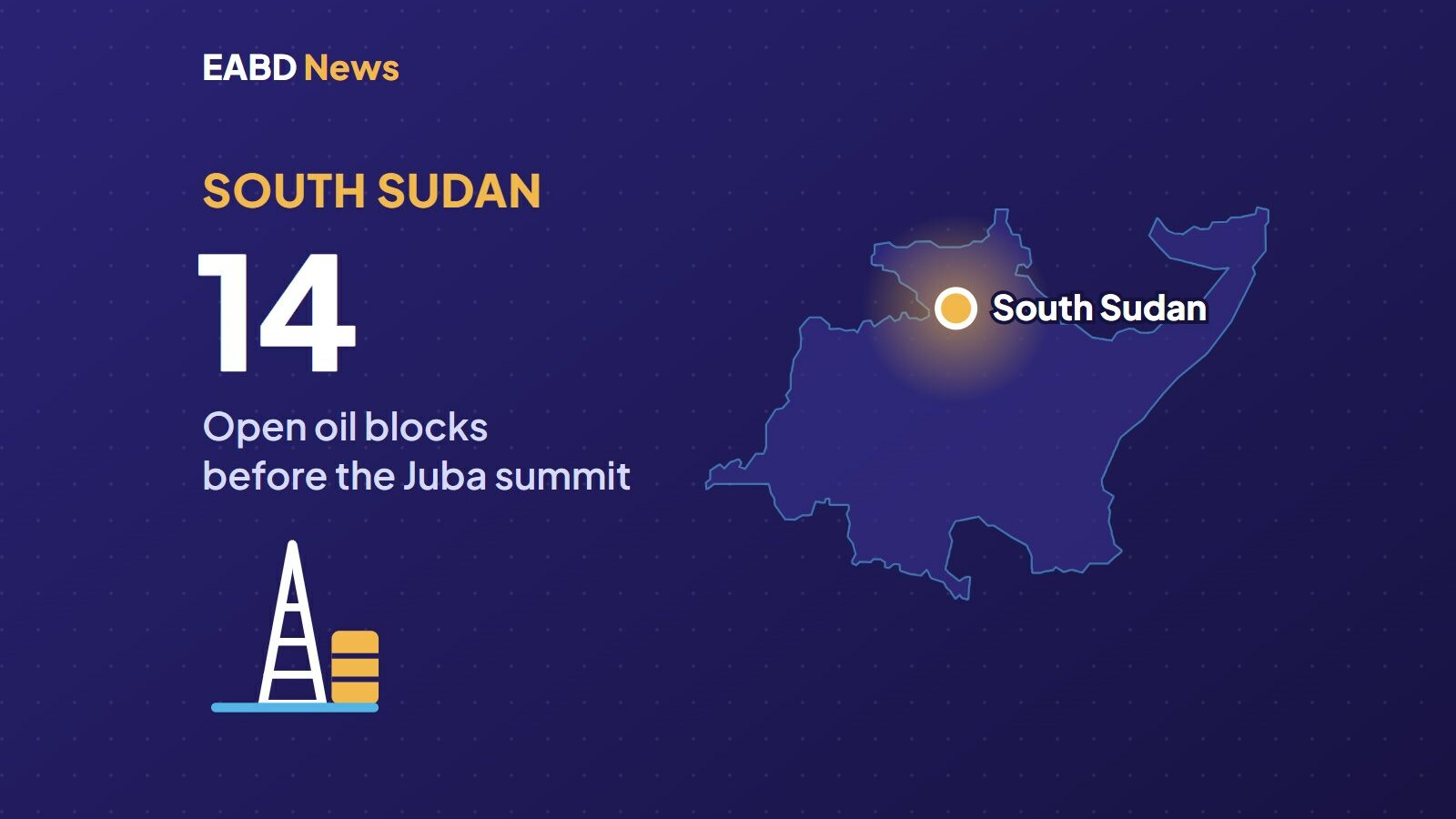
South Sudan oil is back on the investor map. A press release on 5 November says 14 exploration blocks are available for development. It comes as Juba prepares to host South Sudan Oil & Power (SSOP) 2026 on 24 and 25 November.
The same release puts output at about 174,000 barrels a day. The government wants 230,000 in the near term and 450,000 in the longer term. These are big targets for a country that depends on oil for most of its income. A draft budget has oil at about 79.5% of revenue.
Which South Sudan oil blocks are open?
The 14 open blocks are A1, A2, A3, A4, A5, A6, B1, B4, C1, C2, D1, D2, E1 and E2, according to the conference organisers. Five of them, A1, A4, B1, D1 and E2, were offered in the country’s first licensing round.
The organisers put proven reserves at 3.5 billion barrels, with nearly 90% still untapped. Those are promotional figures from an investor event, so treat them with care. Investors can view block data through the Ministry of Petroleum. We found no published licensing terms.
What projects are on the table?
Several projects are being promoted ahead of the summit.
- Block B2: South Africa’s SANPC, through its Strategic Fuel Fund, is preparing to explore in Greater Jonglei State. An aerial survey covered about 47,000 square kilometres in 2024, and a 2D seismic campaign is planned.
- New pipeline: Nile Petroleum Corporation is proposing a 350 km crude line linking the Tharjiath oilfields with the Paloch oilfields.
- Refining: Superior Process Engineering Company plans 60,000 barrels a day of capacity in two phases, starting at Tharjiath in Unity State.
- New partners: In July, the ministry signed a memorandum with UAE-based Bianchi Gold Trading Investment Company. It covers exploration, storage, refining and training.
- Existing fields: Greater Pioneer Operating Company reported more than 60,000 barrels a day this year, and the government wants 75,000 by the end of 2026.
A memorandum is not a contract, and a proposal is not a pipeline. Most of these are still plans, so it is worth watching what gets signed in Juba.
How solid is the South Sudan oil story?
The World Bank’s October outlook is more cautious than the conference material. It says the government has announced production capacity of up to 174,000 barrels a day, but that available data suggest lower export volumes. It expects output to settle at around 154,000.
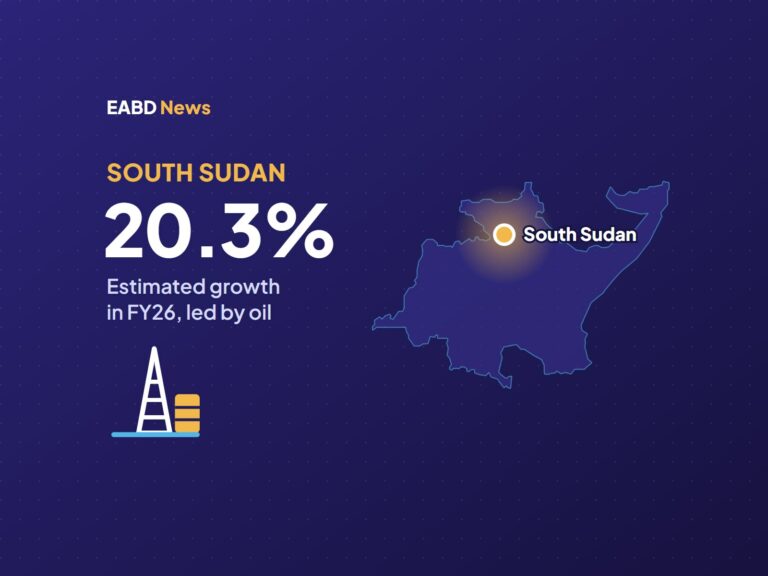
The bank also sees growth of 20.3% in the 2026 financial year, falling to 1.2% in 2027 as the oil rebound fades. It says ongoing arbitration over assets once run by Petronas may weigh on investor confidence.
Exports remain the main weakness. Crude must travel through Sudan, and a 2024 rupture of the Bashayer pipeline stopped Dar Blend exports for about a year. The press release itself says that export disruption has shown the need for resilient transport and midstream systems.
Politics adds more risk. General elections are set for 22 December, less than a month after the summit.
Where are the openings for local firms?
Most South Sudanese firms will not bid for an oil block. The real chance lies in the work around the industry. Local Content Regulations took effect in 2019 under the Petroleum Act.
- Hotels and catering: The 2023 event drew over 600 delegates from 24 countries. Organisers expect more than 30 countries this year.
- Transport and logistics: Survey crews, pipelines and refineries all need reliable movers.
- Construction and maintenance: Camps, roads and storage all need local builders.
- Professional services: Foreign firms need lawyers, accountants and translators on the ground.
Hospitality is the largest sector among the 803 businesses in South Sudan on EABD, with 179 firms.
What should businesses do now?
- Prepare for the summit. Know who will be in Juba, and what you can offer them.
- Read the local content rules. Know what a foreign operator must buy locally, and make sure your company papers are current.
- Find a partner. Pair up with a regional firm that has oilfield experience. EABD Sourcing can help you compare suppliers across East Africa.
- Price with care. The Bank of South Sudan’s official dollar selling rate was about SSP 5,864 this week. Check your quotes often.
- Plan around the election. Think about staff, stock and transport before 22 December.
What happens next?
Watch the Juba summit for signed deals and for any published licensing terms. Watch the export route through Sudan as well. New South Sudan oil licences will mean little if crude cannot reach the market.