Analysis Companies
DR Congo residents sue COMMUS over Kolwezi mine pollution
Twenty-seven residents of Kolwezi have taken copper and cobalt miner COMMUS, the Congolese state and the environment agency to court, seeking about US$6.3 million. COMMUS says it will contest the claims.
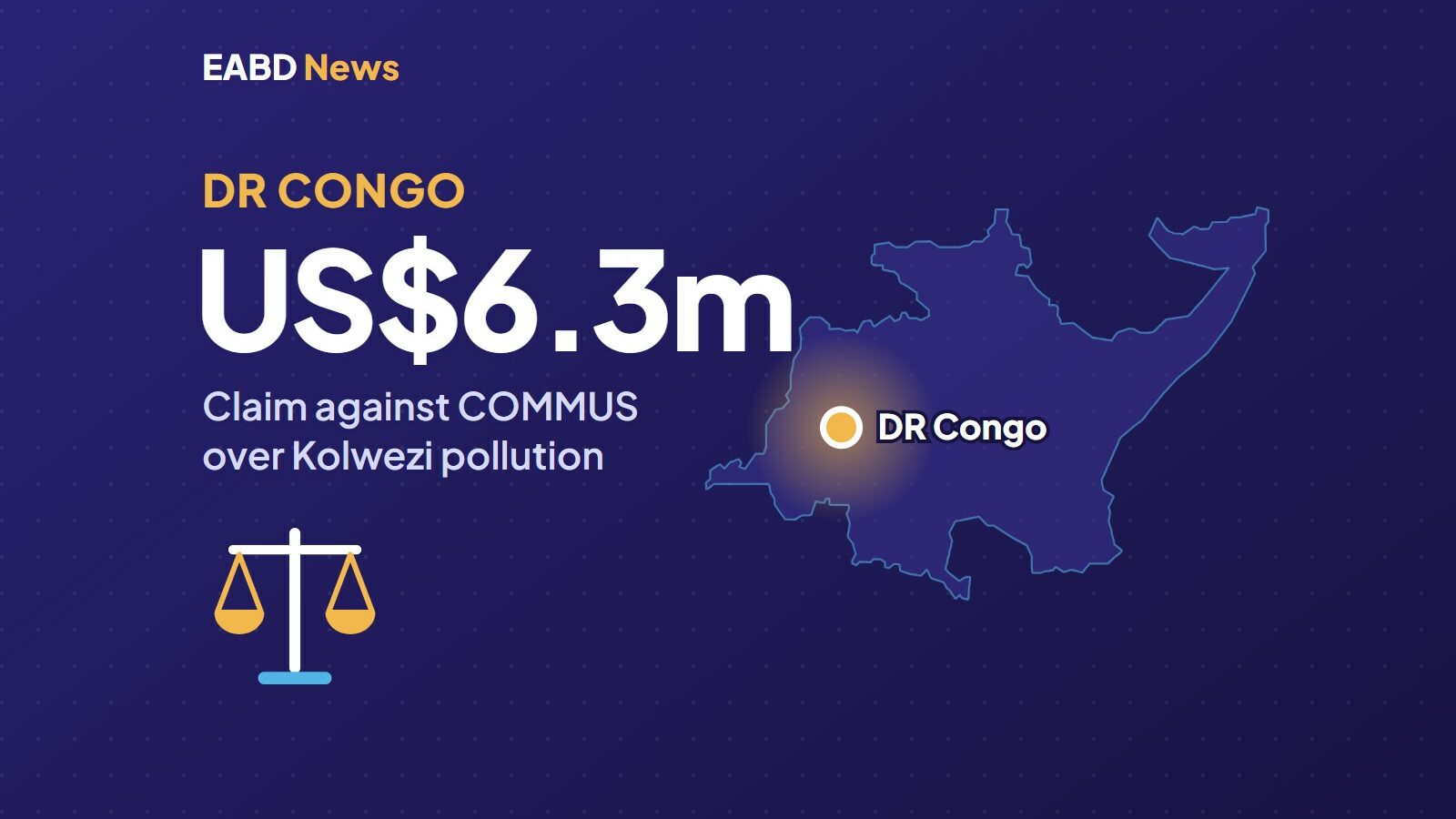
Kolwezi mine pollution is now before a Congolese court. Twenty-seven residents, including eight children, have sued the copper and cobalt miner COMMUS. The first hearing at the Commercial Court in Kolwezi dealt only with procedure. The court has not examined the claims, and no ruling has been made.
The case also names the Congolese state and its environment agency, ACE. The residents accuse them of failing to monitor the mine and enforce the law. COMMUS said it takes its responsibilities to the community and the environment seriously.
What do the residents want?
They are asking for about US$6.3 million, plus changes on the ground.
- About US$1.3 million in compensation for health problems, medical costs, lost income and distress.
- US$5 million to restore the environment.
- Orders to stop harmful pollution, clean up water and land, and provide safe drinking water.
- Funding for an independent study of health effects.
- Stronger state oversight, and public access to environmental data.
They also say they were never given the mine’s environmental and social impact study, although Congolese law requires it to be public. RAID and the Congolese group AFREWATCH support the case but are not parties to it. MUN Consulting represents the claimants.
What do the studies say about Kolwezi mine pollution?
The case draws on studies published in June 2026 by RAID, AFREWATCH and Source International.
- Galaxy school: About 1,500 children attend this school near the mine. Fine particle pollution there was almost three times the World Health Organization’s daily limit.
- Musonoie district: A permanent air monitor averaged more than five times that limit in September and October.
- Community well: Water near the COMMUS tailings site was highly acidic, with raised levels of metals.
Keep the limits of this in mind. These studies were commissioned by groups backing the case. They are not court findings, and they covered other mines in the region too. RAID also points to a December 2023 breach of the COMMUS tailings dam, which it says flooded a nearby site and damaged homes and a school.
How has COMMUS responded?
COMMUS is a joint venture of Zijin Mining with 67%, the state miner Gécamines with 28% and the Congolese government with 5%, according to the Business and Human Rights Centre. It reports capacity of over 120,000 tonnes of copper and 2,000 tonnes of cobalt a year.
In July the company said its operations comply with Congolese environmental rules. It said its own monitoring shows air quality generally meets the standards. It also said pollution around Kolwezi has several possible sources, including natural geology, past mining and other industry. It pledged more independent monitoring.
Congo’s mines ministry and ACE did not immediately respond to Reuters.
Why does this case matter to mining firms?
The law is the key point. The claimants rely on Article 285 bis of the mining code, which came in with the 2018 reforms. Under it, a mining company can be held liable for environmental harm unless it proves the damage was not caused by its operations. Normally, the person who claims harm must prove it.
That makes this a test case. Kolwezi has many mines close together. If the court applies the rule firmly, COMMUS would have to show that other sources caused the damage. RAID and AFREWATCH say a win “could pave the way” for other communities. Any miner in the region would need to think about the records it keeps.
The stakes go beyond one town. DR Congo produced about three-quarters of the world’s cobalt in 2025, according to US Geological Survey figures cited by the Rio Times. Battery and car makers watch how that cobalt is produced.
What should businesses in the mining belt do?
- Keep good records. If the burden of proof sits with the operator, data is your defence. Log dust, water and waste results.
- Publish what the law requires. Make impact studies available. Hiding them is now part of a court case.
- Review your contracts. Contractors should check who carries liability for environmental harm. A legal adviser can help.
- Expect more questions from buyers. Traders and lenders may ask for proof of how your minerals were produced.
- Look for the opening. Dust control, water treatment, lab testing and independent audits may all see more demand. EABD Sourcing connects buyers with suppliers.
You can browse mining businesses and the 3,992 businesses in DR Congo on EABD. For the wider economy, see our report on inflation and the April 2027 change to cash payments in dollars.
What happens next?
No date for the next hearing has been published. Watch how the court treats Article 285 bis, and whether the state or ACE responds. Either way, Kolwezi mine pollution has moved from a campaign issue to a legal one.