How to register a company in Kenya, Uganda, Tanzania and Rwanda
Steps, government fees and timelines for registering a private company in East Africa's four biggest markets, plus the tax and licence steps that come after.
You need to register a company before you can sign big contracts, open a business bank account or bid for tenders in East Africa. The good news is that the region’s four largest markets now let you do most of it online. The fees, timelines and extra licences still differ a lot.
This guide covers Kenya, Uganda, Tanzania and Rwanda. The figures are those we could confirm in November 2026. Fees change, so check the registry’s own site before you pay.
How long does it take to register a company?
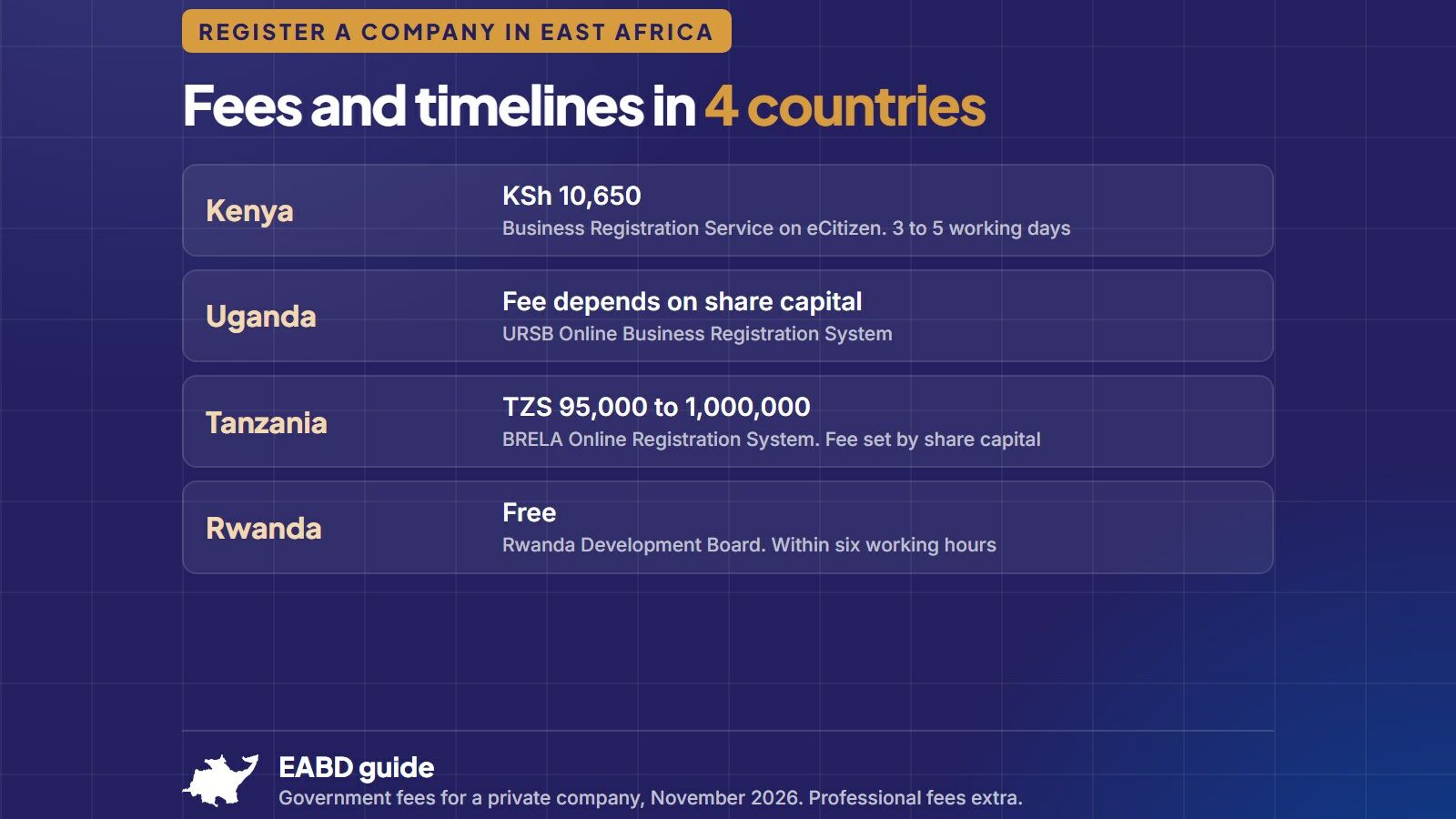
| Country | Registry and system | Government fee | Typical time |
|---|---|---|---|
| Kenya | Business Registration Service, on eCitizen | KSh 10,650 for a private company | 3 to 5 working days |
| Uganda | URSB, on the Online Business Registration System | Depends on share capital | Varies |
| Tanzania | BRELA, on the Online Registration System | TZS 95,000 to TZS 1,000,000, by share capital | Varies |
| Rwanda | Rwanda Development Board, online | Free | Within six working hours |
Professional fees for a lawyer or company secretary are extra in every country. They are worth paying if you have foreign shareholders or a complex share structure.
How do you register a company in Kenya?
- Open an eCitizen account and go to the Business Registration Service.
- Choose a name and check that nobody else is using it.
- Add the directors and shareholders. At least one director must be a real person, not another company.
- Declare the beneficial owners. These are the people who own or control at least 10% of the company.
- Pay the government fee of KSh 10,650 for a private company, and download your certificate.
Most companies get their certificate within three to five working days. A company tax PIN usually comes through the same system.
After that, register with KRA for the taxes you owe. VAT applies once your sales pass KSh 5 million in a year. You also need to register as an employer with NSSF and the Social Health Authority, and get a business permit from your county.
Foreigners can own a Kenyan company outright in most sectors. A few sectors, such as insurance and some telecoms licences, have local ownership rules.
How does company registration work in Uganda?
The Uganda Registration Services Bureau (URSB) runs company registration through its Online Business Registration System. You reserve a name, upload the company’s founding documents and pay the fees. Fees include stamp duty, so they rise with your share capital.
Next, get a tax number from the Uganda Revenue Authority. You also need a trading licence from your local council, such as KCCA in Kampala. Foreign investors can apply to the Uganda Investment Authority for an investment licence and support.
How does company registration work in Tanzania?
BRELA handles company registration through its Online Registration System. Start with a name search. A name reservation costs TZS 50,000, according to a published fee schedule.
New registrar fees took effect on 1 July 2026. They run from TZS 95,000 to TZS 1,000,000, depending on the company’s share capital. After registration, get a tax number from the Tanzania Revenue Authority and a business licence.
Foreign investors who want tax incentives apply for a Certificate of Incentives. Under the Investment Act 2022, foreign investors need at least US$500,000 of capital to qualify. Tanzanian investors need US$50,000. The investment agency now operates as TISEZA, which took over from the Tanzania Investment Centre.
How do you register a company in Rwanda?
Rwanda is the fastest. The Rwanda Development Board says registration is fully online and free of charge. Your company is registered within six working hours, once the certificate is issued.
A tax number comes with registration. You then deal with the Rwanda Revenue Authority for VAT and other taxes as your business grows.
What should you prepare before you start?
- Two or three name ideas, in case your first choice is taken.
- IDs or passports for every director and shareholder.
- Tax numbers for local directors, such as a KRA PIN in Kenya.
- A physical address and postal address for the company.
- How the shares will be split, and who controls the company.
- A short description of what the business will do.
- A working phone number and email for official messages.
Do you need a lawyer to register a company?
Not always. Many local founders register on their own. But a lawyer or company secretary helps when you have foreign shareholders, need a sector licence or plan to raise money later. Mistakes in share structures are slow and costly to fix.
You can find lawyers and accountants and company secretaries on EABD. Then list your new business for free so customers can find it.
Frequently asked questions
How much does it cost to register a company in Kenya?
The government fee for a private company is KSh 10,650, paid on eCitizen. Professional fees are extra if you use a lawyer or agent.
Can a foreigner register a company in East Africa?
Yes. Kenya, Uganda, Tanzania and Rwanda all allow foreign shareholders and directors. Some sectors have local ownership rules, and tax incentives may need a minimum investment.
Which East African country is the fastest for company registration?
Rwanda. Its development board says registration is free and done within six working hours. Kenya usually takes three to five working days.
What comes after company registration?
Register for tax, open a business bank account and get your local business permit. If you hire staff, register as an employer for pensions and health insurance.